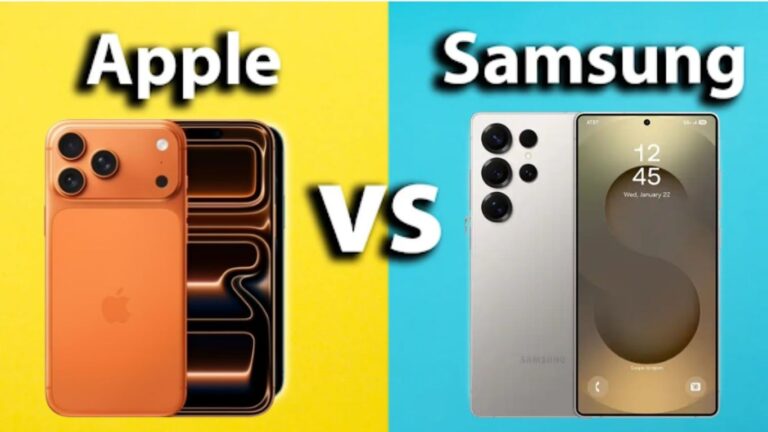
Newest Samsung Phone vs Newest iPhone Comparison 2026: Which Is Better?

Choosing between the newest iPhone and Samsung phone in 2026 is harder than it used to be. Both Apple and Samsung now offer powerful flagship phones with advanced cameras, fast processors, AI features, long battery life, premium designs, and strong ecosystems.
But there is no single iPhone or Samsung phone that is best for everyone.
Apple’s newest premium iPhones include the iPhone 18 Pro and iPhone 18 Pro Max, powered by the A20 Pro chip and iOS 27. Apple has also introduced the iPhone Duo, its first foldable iPhone. Samsung’s latest flagship range includes the Galaxy S26 series, led by the Galaxy S26 Ultra, while its newest foldable lineup includes the Galaxy Z Fold8 and Z Fold8 Ultra.

So, which is better in 2026: the newest Samsung phone or the newest iPhone?
The answer depends on what you want from your phone. This comparison looks at the latest iPhone and Samsung phones across camera quality, performance, battery life, AI, display, software, privacy, gaming, productivity, price, and overall value.
You might also like
iPhone vs Samsung in 2026: Which Phones Are the Newest?
Before comparing the phones, it helps to separate Apple’s traditional flagship phones from its new foldable.
Apple’s newest iPhone models
The iPhone 18 Pro and iPhone 18 Pro Max are Apple’s latest conventional Pro iPhones. They introduce the A20 Pro chip, a new variable-aperture 48MP Fusion Main camera, improved thermal management, longer battery life, and new Siri AI features through iOS 27. The iPhone 18 Pro Max offers up to 45 hours of video playback according to Apple.
Apple has also introduced the iPhone Duo, a completely new foldable design. When closed, it has a 5.4-inch outer display, while opening it reveals a 7.6-inch inner display. Apple says the inner display is 50 percent larger than the iPhone 18 Pro Max display.
Samsung’s newest Galaxy phones
Samsung’s latest traditional flagship is the Galaxy S26 Ultra. It combines a 6.9-inch display, 200MP main camera, 5,000mAh battery, S Pen support, Galaxy AI, and a built-in Privacy Display.
Samsung’s newest foldable range includes the Galaxy Z Fold8 and Galaxy Z Fold8 Ultra. The Fold8 is designed around a wider foldable experience, while the Fold8 Ultra is positioned as Samsung’s most powerful foldable option.
You might also like

This gives us three useful comparisons:
| Category | Apple | Samsung |
|---|---|---|
| Premium traditional flagship | iPhone 18 Pro Max | Galaxy S26 Ultra |
| Standard Pro flagship | iPhone 18 Pro | Galaxy S26 |
| Foldable flagship | iPhone Duo | Galaxy Z Fold8 / Z Fold8 Ultra |
The important point is that “newest Samsung phone” can mean different things depending on the type of phone you want. For a traditional flagship, the Galaxy S26 Ultra is the direct Samsung rival to the iPhone 18 Pro Max. For foldables, the Galaxy Z Fold8 series competes with Apple’s new iPhone Duo.
iPhone 18 Pro Max vs Samsung Galaxy S26 Ultra
For most people looking for the best conventional flagship, this is the most important iPhone vs Samsung comparison of 2026.
The iPhone 18 Pro Max focuses on Apple’s A20 Pro performance, camera controls, battery life, video capabilities, Apple Intelligence, and the iOS ecosystem. The Galaxy S26 Ultra takes a different approach with a 200MP camera system, S Pen, Galaxy AI, built-in Privacy Display, fast charging, and extensive customization through One UI.
Design and build quality
The iPhone 18 Pro Max and Galaxy S26 Ultra are both premium large-screen smartphones, but their designs have different priorities.
You might also like

The iPhone 18 Pro Max uses Apple’s aluminum design and a familiar iPhone shape with a smaller Dynamic Island. Samsung’s Galaxy S26 Ultra uses an Armor Aluminum frame and Corning Gorilla Glass, while maintaining the built-in S Pen that has become a defining feature of the Ultra line.
If you prefer Apple’s simple, tightly controlled hardware design, the iPhone is likely to feel more familiar. If you want a phone designed around productivity, customization, and a built-in stylus, Samsung has the advantage.
Display and screen quality
Samsung continues to make display technology one of the major reasons to choose a Galaxy flagship.
The Galaxy S26 Ultra has a 6.9-inch display with a built-in Privacy Display that can hide the contents of your screen from people viewing it from the side.
The iPhone 18 Pro Max also provides a large premium display with ProMotion and Always-On functionality. Apple’s focus is less about adding every possible display feature and more about integrating the display closely with iOS and the rest of the iPhone experience.
You might also like

For privacy in public places and flexible screen features, Samsung has a particularly strong advantage.
Camera comparison
The camera battle is closer than a simple megapixel comparison suggests.
The iPhone 18 Pro and Pro Max introduce a 48MP Fusion Main camera with variable aperture. Apple says the new system is designed to improve low-light photography and video while giving users more control over depth of field. The Pro models also add manual controls for aperture, shutter speed, white balance, and exposure.
The Galaxy S26 Ultra uses a 200MP main camera alongside 50MP ultra-wide and telephoto cameras. Samsung also offers 5x optical zoom and 10x optical-quality zoom.
That makes the choice more about how you shoot.
You might also like

The iPhone is particularly attractive if video, natural-looking photos, and manual creative controls are important to you.
Samsung is particularly attractive if you want high-resolution photography, flexible zoom, and a broader range of camera options.
Performance and gaming
The iPhone 18 Pro models use Apple’s A20 Pro chip and a redesigned vapor chamber. Apple says the new thermal system enables up to a 40 percent gain in sustained performance over the previous generation.
The Galaxy S26 Ultra uses a customized Snapdragon 8 Elite Gen 5 for Galaxy processor, with Samsung highlighting improvements to CPU, GPU, and NPU performance. Samsung also says its redesigned cooling system improves thermal performance for demanding workloads and gaming.
Both are powerful enough for demanding games, video editing, AI workloads, and multitasking.
You might also like

Rather than choosing based only on benchmark numbers, consider the ecosystem and software you prefer. The iPhone is tightly integrated with Apple’s hardware and software, while Samsung gives Android users more flexibility and customization.
Battery life and charging
Battery life is one of the areas where both companies have made meaningful improvements.
Apple says the iPhone 18 Pro Max delivers up to 45 hours of video playback, while also supporting faster wired charging.
Samsung lists 31 hours of video playback for the Galaxy S26 Ultra and support for charging to up to 75 percent in around 30 minutes.
The published figures come from different manufacturers and testing methods, so they should not be treated as a direct real-world battery test.
You might also like

If charging speed is especially important, Samsung’s faster charging approach is a major advantage. If maximum claimed video playback is the priority, Apple’s iPhone 18 Pro Max has the stronger published figure.
iPhone Duo vs Samsung Galaxy Z Fold8
Apple has finally entered the foldable phone market, creating a new iPhone vs Samsung comparison.
The iPhone Duo has a 5.4-inch outer display and a 7.6-inch inner display. Apple designed both screens around the same aspect ratio and added ProMotion, Always-On functionality, and up to 3000 nits of peak outdoor brightness.
Samsung already has several generations of foldable experience, and its 2026 lineup includes both the Galaxy Z Fold8 and Galaxy Z Fold8 Ultra. Samsung positions the Fold8 around a wider, more immersive foldable experience, while the Ultra model targets maximum productivity and performance.
Which foldable is better?
The iPhone Duo is the more interesting choice if you already use Apple products and want to enter the foldable market without leaving Apple’s ecosystem.
You might also like

The Galaxy Z Fold8 is the more established choice if you want Android flexibility, multitasking, and Samsung’s existing foldable experience.
The Galaxy Z Fold8 Ultra is worth considering if you want Samsung’s highest-end foldable hardware rather than a traditional flagship phone.
Apple’s foldable is also not simply a larger iPhone. It represents a new product category for the company, so buyers should consider durability, software support, app optimization, price, and how often they would actually use the larger screen.
iPhone vs Samsung Camera: Which Has the Better Camera?
There is no universal winner.
Choose an iPhone if your priorities include:
You might also like

- High-quality video
- Consistent photo processing
- Creative camera controls
- Natural-looking photos
- Easy sharing and editing
Choose Samsung if your priorities include:
- High-resolution photography
- Long-range zoom
- Multiple camera perspectives
- AI-powered editing
- More control over the camera experience
The Galaxy S26 Ultra has a 200MP main camera and multiple telephoto options, while the iPhone 18 Pro models introduce variable aperture and more extensive manual camera controls.
For this reason, “which phone has the better camera?” is better answered by asking what type of photography you do.
iPhone vs Samsung for AI
AI is now one of the biggest differences between modern smartphones.
The iPhone 18 Pro and Pro Max run iOS 27 with Apple Intelligence and a new Siri AI experience. Apple describes Siri AI as more personal and conversational, with the ability to understand personal context and onscreen information.
You might also like

Samsung’s Galaxy S26 Ultra uses Galaxy AI across features such as photo editing, contextual suggestions, and productivity tools. Samsung also combines its AI features with on-device security through technologies including Knox Vault and its Personal Data Engine.
If you already use Apple devices, Apple’s AI features may fit more naturally into your existing workflow.
If you prefer Android flexibility and want AI features integrated throughout the Galaxy experience, Samsung is a strong alternative.
iPhone vs Samsung for Software and Ecosystem
The biggest difference between iPhone and Samsung is not always the hardware. It is the ecosystem.
Choose iPhone if you prefer iOS
The iPhone makes the most sense if you already use products such as a Mac, Apple Watch, AirPods or other Apple services.
You might also like

Apple controls the hardware and software together, creating a consistent experience across its products.
Choose Samsung if you prefer Android
Samsung offers more customization and works with a much broader range of Android and Windows hardware.
Samsung also makes it easier to move between Galaxy phones and other devices, while features such as Quick Share connect Galaxy devices with supported Apple devices as well.
Neither approach is automatically better. The better ecosystem is usually the one that fits the devices and services you already use.
iPhone vs Samsung for Privacy and Security
Privacy has become another important part of the flagship phone comparison.
You might also like
Apple emphasizes privacy and security throughout its hardware, software, and AI systems. The iPhone 18 Pro models are designed around Apple Intelligence with privacy and security as a core part of the experience.
Samsung has also made privacy a visible part of its latest flagship strategy. The Galaxy S26 Ultra includes a built-in Privacy Display that can hide parts of the screen from people nearby, while Samsung’s Knox security platform protects data on the device.
If you want a phone that puts privacy at the center of the overall ecosystem, iPhone remains a strong choice.
If you want both software security and a physical screen privacy feature, Samsung offers something unusual that the iPhone does not.
iPhone vs Samsung for Gaming
Both the iPhone 18 Pro Max and Galaxy S26 Ultra are powerful gaming phones.
You might also like
The iPhone benefits from Apple’s A20 Pro chip and improved thermal management, while Samsung uses a customized Snapdragon 8 Elite Gen 5 for Galaxy with enhanced graphics performance and cooling.
Samsung can be more attractive to gamers who want Android customization, a large display, and additional multitasking options.
The iPhone is attractive for players who prefer iOS and the games and accessories available within Apple’s ecosystem.
For serious mobile gaming, either flagship provides more than enough performance for demanding games.
iPhone vs Samsung for Productivity
Samsung has an important advantage for productivity because the Galaxy S26 Ultra includes an S Pen.
You might also like

The combination of a large display, stylus input, multitasking, Samsung DeX, and Android flexibility makes the Galaxy Ultra particularly useful for people who want their phone to do more than handle calls and social media.
The iPhone 18 Pro Max is better suited to users who already work within Apple’s ecosystem and want their phone connected closely with their other Apple devices.
For productivity, the better choice depends heavily on your existing workflow.
iPhone vs Samsung: Price and Value
Price is another reason not to declare a universal winner.
The most expensive iPhone and Samsung models are premium devices, and the final cost can increase significantly with higher storage configurations.
You might also like

Samsung also provides several flagship options, including the standard Galaxy S26, S26+, and S26 Ultra, giving buyers more ways to enter the current Galaxy S26 family.
Apple’s current Pro lineup is more focused. The iPhone 18 Pro and Pro Max are the main conventional premium models, while the iPhone Duo creates a new high-end foldable category.
Instead of asking only which phone is cheaper, ask which phone gives you the features you will actually use.
A phone that costs less but lacks features you need may not be better value. Likewise, paying more for a premium feature you rarely use may not make sense.
Which Is Better: iPhone or Samsung in 2026?
There is no single winner for every buyer.
You might also like

Best for the Apple ecosystem: iPhone
Choose the iPhone if you already use Apple products and want your phone, computer, watch, earbuds, cloud services, and other devices to work closely together.
Best for customization and productivity: Samsung
Choose Samsung if you want Android flexibility, deeper customization, multitasking, S Pen support, and more hardware choices.
Best premium traditional flagship: iPhone 18 Pro Max or Galaxy S26 Ultra
This is the closest head-to-head battle.
The iPhone 18 Pro Max is compelling for users who prioritize Apple’s ecosystem, video, camera controls, iOS, and long battery life.
The Galaxy S26 Ultra is compelling for users who want advanced zoom, S Pen support, Android customization, Galaxy AI, fast charging, and a built-in Privacy Display.
You might also like

Best for foldables: iPhone Duo or Galaxy Z Fold8
The iPhone Duo is the new option for Apple users who want a foldable iPhone experience.
The Galaxy Z Fold8 is the more established Android foldable choice, while the Z Fold8 Ultra targets users who want Samsung’s highest-end foldable experience.
So, Which Phone Should You Buy in 2026?
The best phone depends on what you value most.
Buy the newest iPhone if you want:
Apple’s ecosystem, iOS, strong video capabilities, integrated AI, long-term software integration, and a familiar premium experience.
Buy the newest Samsung phone if you want:
Android flexibility, customization, powerful multitasking, advanced zoom, S Pen functionality, Galaxy AI, and more hardware choices.
You might also like

Buy a foldable if you want:
A much larger screen for reading, multitasking, entertainment, productivity, and other tasks without carrying a separate tablet.
For the traditional flagship battle, the iPhone 18 Pro Max and Galaxy S26 Ultra are the phones to compare most closely.
For the new foldable battle, the iPhone Duo and Galaxy Z Fold8 family represent two very different approaches to the future of smartphones.
Frequently Asked Questions About iPhone vs Samsung
Which is better, iPhone or Samsung in 2026?
Neither is universally better. iPhone is a strong choice for Apple’s ecosystem, iOS, video, and integrated services, while Samsung is a strong choice for customization, productivity, zoom photography, Android flexibility, and hardware features such as the S Pen.
Is iPhone 18 better than Samsung Galaxy S26?
It depends on the model and what you value. The iPhone 18 Pro is Apple’s current premium conventional model, while the Galaxy S26 is Samsung’s smaller flagship. Camera preferences, software, AI features, battery life, and ecosystem can all change the better choice.
You might also like

Is iPhone 18 Pro Max better than Galaxy S26 Ultra?
The iPhone 18 Pro Max is better suited to people who prefer Apple’s ecosystem, iOS, video capabilities, and Apple’s camera approach. The Galaxy S26 Ultra is better suited to people who want Android customization, S Pen support, advanced zoom, Galaxy AI, and Samsung’s built-in Privacy Display.
Which has a better camera, iPhone or Samsung?
Both are excellent. iPhone emphasizes video, consistent image processing, and creative camera controls, while Samsung offers a high-resolution camera system with powerful zoom and multiple shooting options.
Which has better battery life, iPhone or Samsung?
Battery life varies by model and usage. Apple’s iPhone 18 Pro Max has a published claim of up to 45 hours of video playback, while Samsung lists up to 31 hours for the Galaxy S26 Ultra. Manufacturer testing methods differ, so these numbers should not be treated as a direct real-world comparison.
Which is faster, iPhone or Samsung?
Both are flagship-level performers. The iPhone 18 Pro uses Apple’s A20 Pro, while the Galaxy S26 Ultra uses a customized Snapdragon 8 Elite Gen 5 for Galaxy. Everyday performance differences are unlikely to matter to most users.
Which is better for gaming, iPhone or Samsung?
Both are excellent for gaming. Samsung can appeal to Android users who want customization and multitasking, while iPhone is a strong choice for users who prefer iOS and Apple’s ecosystem.
You might also like

Which has better AI, iPhone or Samsung?
Both have strong AI systems. Apple’s iPhone 18 Pro models use Apple Intelligence and Siri AI, while Samsung’s Galaxy S26 Ultra integrates Galaxy AI throughout the phone. The better option depends on which ecosystem and AI tools fit your workflow.
Is Samsung better than iPhone for productivity?
Samsung has a strong productivity advantage because the Galaxy S26 Ultra includes an S Pen and Android provides extensive multitasking and customization. iPhone can be the better choice if your work already revolves around Apple’s ecosystem.
Is iPhone better than Samsung for privacy?
Both companies provide extensive privacy and security features. Apple emphasizes privacy throughout its ecosystem, while Samsung combines Knox security with features such as the Galaxy S26 Ultra’s built-in Privacy Display.
Should I switch from Samsung to iPhone?
Consider switching if you want iOS, Apple’s ecosystem, or deeper integration with other Apple products. If you rely heavily on Android customization, Samsung features, or the S Pen, staying with Samsung may make more sense.
Should I switch from iPhone to Samsung?
Samsung is worth considering if you want more customization, Android flexibility, S Pen functionality, advanced zoom, or a Galaxy foldable.
You might also like

Is iPhone Duo better than Galaxy Z Fold8?
The iPhone Duo is Apple’s first foldable and is particularly interesting for people already invested in the Apple ecosystem. The Galaxy Z Fold8 is Samsung’s more established foldable platform and offers a mature Android multitasking experience. Your choice should depend on ecosystem, software, productivity needs, and how you plan to use the larger screen.
Which is the best iPhone to buy in 2026?
For Apple’s current premium conventional lineup, the iPhone 18 Pro Max is the top choice for users who want the largest Pro iPhone and maximum battery life. The iPhone 18 Pro is the better option if you want the Pro experience in a smaller phone.
Which is the best Samsung phone to buy in 2026?
For a traditional flagship, the Galaxy S26 Ultra is Samsung’s top Galaxy S phone. If you specifically want a foldable, Samsung’s Z Fold8 and Z Fold8 Ultra provide a different large-screen experience.
Which phone is the best value in 2026?
The best value depends on the features you need. You do not necessarily need the most expensive Pro or Ultra model. A smaller flagship can offer most of the important performance and camera features while costing less.
iPhone vs Samsung 2026: The Bottom Line
The newest iPhone and Samsung phones are no longer competing on specifications alone. They are competing on the entire experience.
You might also like

The iPhone 18 Pro Max is a strong choice for people who want Apple’s premium iPhone experience, advanced camera controls, powerful performance, long battery life, and close integration with Apple’s ecosystem.
The Galaxy S26 Ultra is a strong choice for people who want Android flexibility, advanced zoom cameras, an S Pen, Galaxy AI, fast charging, and a built-in Privacy Display.
The iPhone Duo introduces Apple’s approach to foldable phones, while the Galaxy Z Fold8 family gives Samsung a more established foldable platform with multiple form factors and productivity options.
So, which is better: iPhone or Samsung?
The best choice is the one that fits how you actually use your phone.
You might also like

If your priority is the Apple ecosystem, choose iPhone. If you want customization, productivity, and broader hardware flexibility, choose Samsung. And if you want a phone that can become a larger workspace, compare Apple’s new iPhone Duo with Samsung’s latest Galaxy Z Fold8 models.
The smartphone market in 2026 is no longer simply about choosing between Apple and Samsung. It is about choosing the technology experience that fits your life.