
BitLife Astronaut Answers

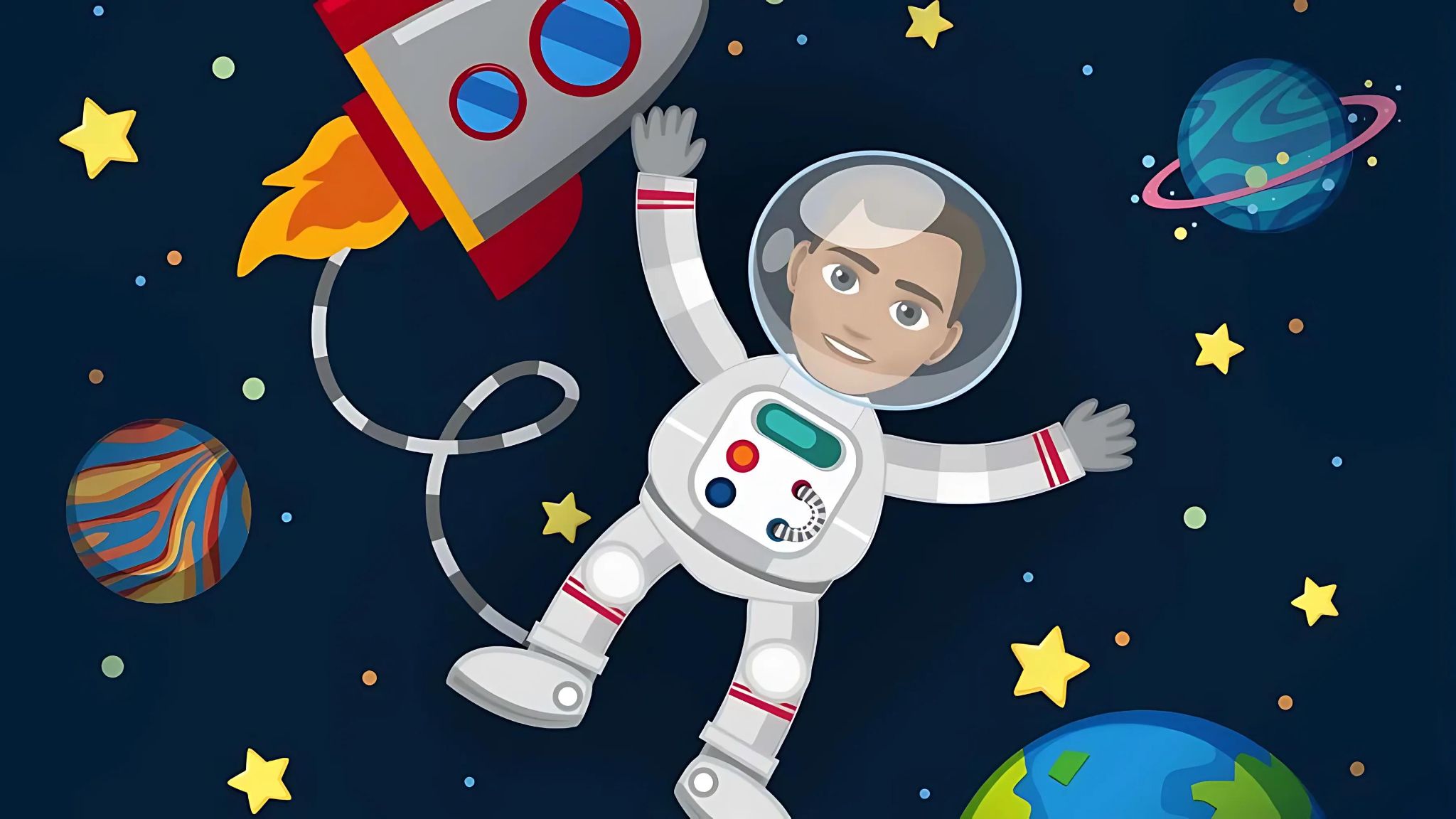





Becoming an astronaut in BitLife is one of the most challenging and rewarding careers. From earning a STEM degree to completing the Space Academy tests and launching into space missions, there’s a lot to accomplish.
This guide will provide all BitLife astronaut answers, including Technical Training, Space Scanning, and probe missions, with tips and strategies to make your career in space fast, efficient, and successful.
How to Become an Astronaut in BitLife
The astronaut career in BitLife mirrors real-life challenges. Preparation, skill, and strategy are key. Here’s a step-by-step guide:
Step 1: Earn a STEM Degree
To apply for Space Academy, your character must have a STEM degree. Physics, Engineering, or Information Systems are ideal for unlocking astronaut eligibility. The faster you get this degree, the sooner you can start your journey to the stars.
Step 2: Attend Flight School
Before Space Academy, complete pilot training. You need a pilot license, earned by attending flight school, completing flying hours, and passing the Pilot Test. This is critical for advancing in the astronaut career.
Step 3: Pass Space Academy Tests
Once in Space Academy, you’ll face three major tests: Technical Training, Fitness, and Flight Training. The Technical Training Test is filled with multiple-choice questions about space, physics, astronomy, and spacecraft operations. Correct answers boost your technical training stats and help you graduate.
You might also like

Step 4: Complete Space Scanning and Missions
After graduation, astronauts perform space scans, probe missions, and cosmic anomaly detection. Correct answers and precise scanning are essential for mission success. This includes planet locations, GHz scanning ranges, and proper probe usage.
Step 5: Climb Astronaut Ranks
Promotions in BitLife depend on mission performance, scan accuracy, and overall stats. Starting as a Trainee, you can rise to Junior Astronaut, Senior Astronaut, and Commander, unlocking high-paying missions and career benefits.
Bitlife Astronaut Technical Training Answers
To take part in an astronaut’s Technical Training in Bitlife, you first need to be attending Space Academy. Open up the ‘Occupations’ tab and then select the academy to see a list of activities you can take part in, including Technical Training. Make sure to not neglect Fitness Training and Flight Training too!
In the below table, we have listed all of the Technical Training questions and answers that you might be presented with while training to be an astronaut at Bitlife’s Space Academy.
| Technical Training Question | Answer |
|---|---|
| What does a light-year measure? | Distance |
| Who was the first person to step foot on the moon? | Neil Armstrong |
| How long does it take to travel to Earth from the Moon? | Three Days |
| What type of spacecraft is used to transport astronauts from Earth to and from the International Space Station? | Soyuz Spacecraft |
| What is the purpose of a nose cone on a rocket? | Reduce Air Resistance |
| Which type of rocket engine is used to maneuver spacecraft during flight and adjust their trajectory? | Maneuvering Thrusters |
| What is the name of the robotic arm used by astronauts to manipulate objects outside the spacecraft? | Canadarm |
| What is a meteorite? | A rock from space that hits Earth |
| The Great Red Spot appears on which planet? | Jupiter |
| How many astronauts have set foot on the moon? | 12 |
| Where did the moon landing take place in 1969? | The Sea of Tranquility |
| What is the purpose of the solar panel on satellites? | To power satellites |
| What does the acronym LEO stand for? | Low Earth Orbit |
| How old is the Earth? | 4.5 Billion Years Old |
| Who invented the telescope? | Hans Lipperhay/Lippershay |
| How long does it take light from the Sun to reach Earth? | 8 Minutes |
| What makes it possible for the Earth to orbit the Sun? | Gravity |
| What is the speed of light? | 300 million meters-per-second |
| What is the name of the tool used by astronauts to collect samples of rock and soil from the surface of the moon? | Rock Hammer |
| What is an astronaut’s maximum absorbency garment? | Diapers |
| What is the force that causes the plane to fly? | Lift |
| What is the name of our moon? | The Moon |
| What keeps astronauts in place when sleeping in zero gravity? | Velcro |
| What’s the name for the point at which nothing can escape a black hole’s gravitational pull? | Event Horizon |
| What is the name of the device that astronauts wear to regulate the flow of oxygen and remove carbon dioxide while in space? | Liquid Cooling and Ventilation Garment |
| What protective layer surrounds a rocket to protect it from the intense heat generated during re-entry into Earth’s atmosphere? | Heat Shield |
| Which instrument measures the mix and concentration of the air astronauts breathe inside a spacecraft? | Oxygen Sensor |
| What is the name of the machine that simulates the effect of gravity on the human body? | Centrifuge |
| What is the force that counteracts the thrust force for flight? | Drag |
| What keeps an astronaut attached to a spacecraft while on a spacewalk? | Tether System |
| What is the reflective glass covering on an astronaut’s spacesuit called? | Visor |
| At 450 degree Celsius, which planet is the hottest in the solar system? | Venus |
| What is the term for the left and right movement of a plane? | Yaw |
| How many Earths can fit inside the Sun? | One Million |
| What is the payload of a rocket? | The cargo taken into space |
| What is a constellation? | A pattern of stars |
| Stars are fueled by the nuclear fusion of what gas? | Hydrogen |
| What is the name of the galaxy that will collide with the Milky Way someday? | Andromeda |
| What is the official term for an astronaut’s spacesuit? | Extravehicular Mobility Unit |
| What was the first mammal in space? | A Dog |
| How often does the Earth revolve around the Sun? | Once every 365 days |
| How long does it take the space station to orbit once around Earth? | 90 Minutes |
You might also like

BitLife Space Scanning Answers
Space Scanning is crucial for missions and promotions. Correct scanning ensures success in identifying planets and cosmic anomalies.
Planet Scanning Order (from the Sun):
- Mercury
- Venus
- Earth
- Mars
- Jupiter
- Saturn
- Uranus (60–70 GHz Range)
- Neptune (70–80 GHz Range)
- Deep Space (100 GHz)
Tips for Space Scanning:
- Scan planets in exact order.
- Confirm GHz ranges for Uranus and Neptune.
- Use Deep Space scan for 100 GHz detection.
- Repeat scans if needed to complete missions.
BitLife Pilot Test Answers
Before entering Space Academy, passing the Pilot Test is mandatory. Here are the main answers you’ll need:
| Question | Answer |
|---|---|
| What is the force that allows a plane to fly? | Lift |
| What counteracts thrust during flight? | Drag |
| What is the term for left and right movement of a plane? | Yaw |
| What type of engine maneuvers spacecraft during flight? | Maneuvering Thrusters |
| What is the purpose of the nose cone on a rocket? | Reduce air resistance |
| Which is the most common propellant for a rocket? | Liquid Hydrogen |
Passing this test efficiently ensures you get your pilot license and are eligible for Space Academy.
You might also like

Other Space-Related Activities in BitLife
Decrypt Alien Messages
Some missions involve alien messages that must be decrypted. Letters are replaced according to hints, like “O is Y”. Correct decryption increases your mission success rate.
Health & Fitness
Maintaining high health stats is essential. Activities like:
- Gym workouts
- Healthy meals
- Meditation
…keep your astronaut fit for zero-gravity tasks and mission endurance.
Probe Missions
Probe missions require selecting optimal probe designs. Focus on speed, durability, and power to successfully complete sample collection, scans, and anomaly detection.
BitLife Astronaut Career & Ranks
Your astronaut career progresses through multiple ranks, unlocking better missions and rewards:
You might also like

- Trainee – Entry after Space Academy
- Junior Astronaut – Early missions completed successfully
- Senior Astronaut – Mid-level rank, access to advanced missions
- Commander – Highest rank with maximum pay and mission rewards
Ranking Tips:
- Complete missions accurately
- Perform scans and probes correctly
- Keep Health and Energy high
- Avoid failures to maintain a strong reputation
Tips & Tricks for BitLife Astronaut Success
- Choose a STEM degree (Physics or Engineering).
- Memorize Technical Training questions and answers.
- Scan planets in exact order and check GHz ranges.
- Optimize probe missions for success.
- Keep Health and Fitness high for all tasks.
- Solve alien messages to gain bonus reputation.
Following these tips will make your astronaut career easier, faster, and more profitable.
BitLife Astronaut Answers FAQ
What are the BitLife Astronaut answers?
BitLife Astronaut answers are the correct responses to the technical questions presented during Astronaut Technical Training at Space Academy. The questions cover astronomy, rockets, spacecraft, physics, space exploration, and basic aviation. The questions are selected from a larger pool, so your test may contain a different combination from another player’s test.
How do you pass Astronaut Technical Training in BitLife?
To pass Astronaut Technical Training in BitLife, answer the technical questions correctly and continue training until your Technical Training progress is sufficiently high. The test can include questions about subjects such as the speed of light, rocket propulsion, spacecraft, the Moon, planets, and astronomy. Using a current BitLife Astronaut answer cheat sheet can help you identify the correct option quickly.
What are the BitLife Space Academy questions and answers?
BitLife Space Academy questions include astronomy and spaceflight topics such as the closest star to Earth, rocket propellants, spacecraft engines, the International Space Station, astronauts’ equipment, planetary science, and aviation. Technical Training questions are randomized, so it is useful to search the complete answer list for the wording of the question you receive.
You might also like

What degree do you need to become an astronaut in BitLife?
A STEM degree is the recommended educational route for becoming an astronaut in BitLife. Commonly recommended subjects include Mathematics, Physics, Chemistry, Engineering, Computer Science, and other science or technology-related fields. After university, you also need to complete the required pilot and Space Academy training before applying to a Space Agency.
Do you need a pilot’s license to become an astronaut in BitLife?
Yes. A pilot’s license is part of the usual BitLife astronaut career path. You first complete the required flight lessons, obtain the pilot’s license, and then proceed to Space Academy for Fitness, Flight, and Technical Training before applying to a Space Agency.
What countries can you become an astronaut in BitLife?
Current BitLife astronaut guides identify countries with available space programs as eligible starting locations for the astronaut career. Commonly listed countries include the United States, United Kingdom, Germany, Russia, Japan, and Canada. Available countries and career mechanics can change with game updates.
What training do you need to complete at Space Academy in BitLife?
Space Academy includes three major areas of astronaut preparation: Fitness Training, Flight Training, and Technical Training. Fitness Training develops physical readiness, Flight Training tests piloting skills, and Technical Training uses astronomy and space-related questions. Performing well across all three areas improves your preparation for the astronaut career.
What is the answer to the BitLife astronaut question about the closest star to Earth?
The answer is The Sun. This is one of the recurring Astronaut Technical Training questions documented in BitLife astronaut answer guides.
You might also like

What is the answer to the BitLife astronaut question about the most common rocket propellant?
The answer is Liquid Hydrogen. This is another recurring Technical Training question included in published BitLife astronaut answer lists.
What happens after you pass Astronaut Training in BitLife?
After successfully completing the required Space Academy training, you can apply for an astronaut position with an available Space Agency. New astronauts normally begin at a lower rank and can progress by completing space-related duties, missions, research, and other career activities as they become available.
Can you become an astronaut in BitLife without memorizing the answers?
Yes. You can answer the Technical Training questions using your knowledge of astronomy and science instead of memorizing a cheat sheet. However, because the test draws from a large question pool and some questions can be reworded, a searchable BitLife Astronaut Answers guide can make the training much faster.
Conclusion
The BitLife astronaut career is challenging but incredibly rewarding. With this complete guide of BitLife astronaut answers, you’ll know every Technical Training question, Space Scanning sequence, and probe mission trick.
From the Sea of Tranquility to Venus’ scorching heat, and scanning planets in the correct order with precise GHz ranges, your astronaut journey is fully mapped.
You might also like

Bookmark this guide, follow the tips, and dominate the BitLife cosmos. Launch into space, climb astronaut ranks, and become the ultimate BitLife astronaut!
You might also like





There is definately a lot to find out about this bitlife content. I like all the points you made