
The Film Frames the Fraud Narrowly. The Record Shows What Is Missing.

A fact-check of “You Can See Everything,” the A24 film that left some viewers sympathizing with Elizabeth Holmes
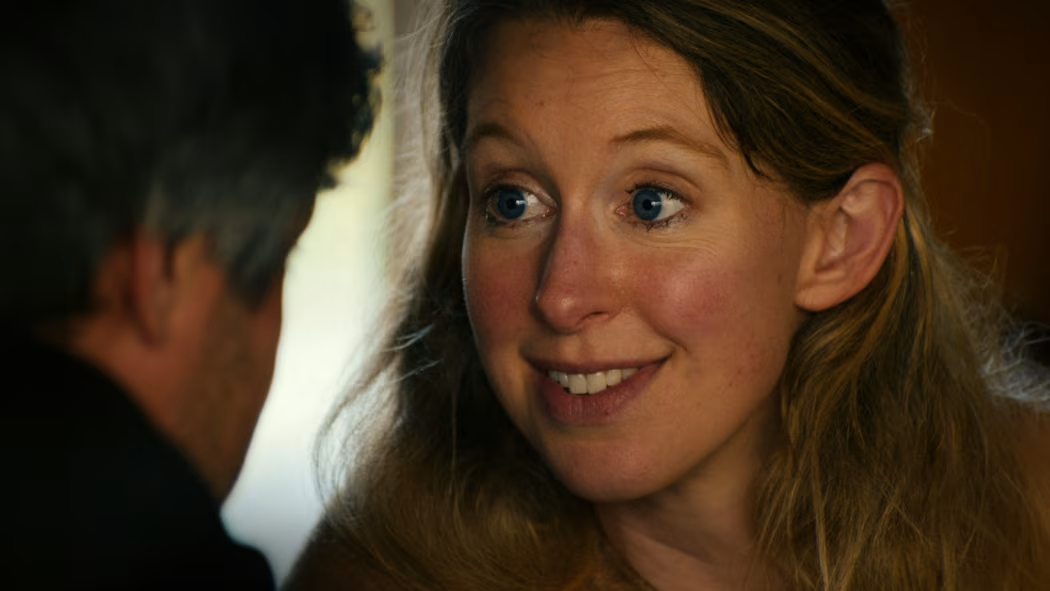
Nathan Fielder and Lance Oppenheim’s “You Can See Everything” has become a box-office hit and an Oscar talking point. It follows Elizabeth Holmes for about a month before she reports to prison, and it keeps its camera almost entirely inside the rented home she shared with her partner, Billy Evans. Critics who know the Theranos story say the confined frame is the problem. Much of what could settle the film’s central question, whether Holmes lies, sits just outside it.
The device on the table. In one scene Holmes lays out a disassembled Theranos machine and says it “can” run any test, which leads Fielder into a debate about the word. Tyler Shultz, the former Theranos employee who became a whistleblower, writes in STAT that the machine on the table was not the one used on patients. He says it was an unfinished future model. The real one, the “Edison,” ran one type of blood test at a time and was, in his words, a rudimentary eight-channel pipette in a box. The film never shows it.
The numbers. Shultz points to the SEC’s findings that Holmes gave an investor financials showing $108 million in 2014 revenue. Actual revenue was little more than $100,000, and she declined to show audited statements. He argues those facts are hard to square with the idea that she believed her own claims.
The setting. Holmes and Evans appear in a modest rental, but Shultz notes that Evans’s family owns a luxury resort at Torrey Pines. He also notes that she lived on an estate listed at $125 million during her trial. Slate’s Shannon Palus adds a report that the beach house rented for about $28,000 a month.
The trip to prison. The film implies the couple drove to Texas. Evans said in a later interview that they flew by private jet, both writers note.
The verdict. Sunny Balwani, her former partner at Theranos, was convicted on all 12 counts. Holmes was convicted on four. Shultz argues she steered blame toward Balwani all along. He believes her accounts of abuse by Balwani, but says they do not excuse her conduct.
The afterlife online. Palus describes a growing view of Holmes as a victim of misogyny and domineering men, with unauthorized merchandise already on sale. Journalist John Carreyrou, who broke the story, rejects the idea that she is unknowable and says the fraud was a deliberate cover-up with Holmes in control.
Shultz doesn’t blame Fielder entirely. He notes that the film signals Fielder is a compromised narrator, and that Fielder himself has said he doesn’t fully understand what he went through. Palus, who admits the film worked on her too, says a few facts on screen would not have ruined it.