
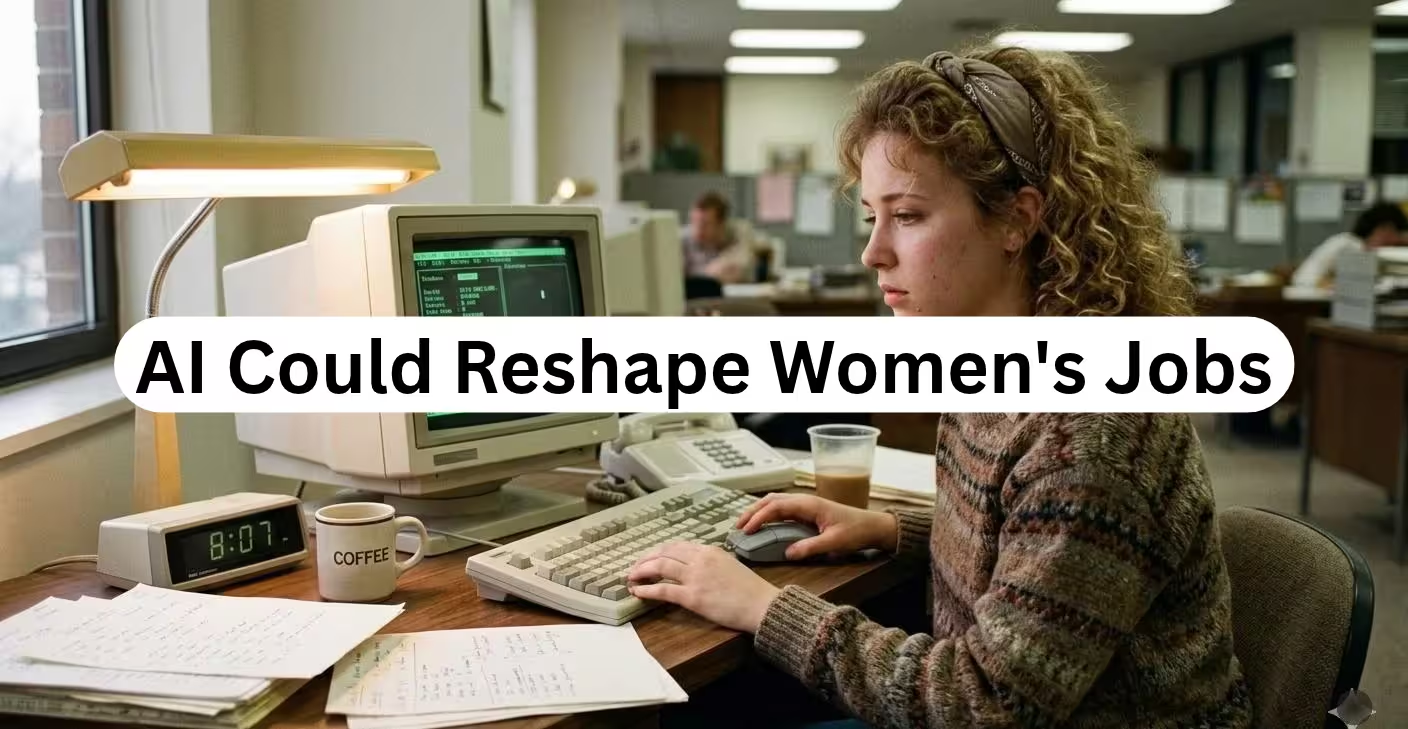
AI Could Reshape Women’s Jobs: Who Benefits From Automation?

Artificial intelligence is changing how businesses handle everyday work, from writing reports and managing records to answering customer questions. As companies adopt these tools, a concern is growing: women may face greater disruption because they are more concentrated in the occupations that generative AI can affect.
CNBC examined the concern on October 19, 2026, through the history of telephone automation and personal computers, two technologies that reshaped office jobs in which women were heavily represented. The International Labour Organization (ILO) has put numbers on the same worry.
This article goes through the data, the history behind it, the evidence on both sides, and what it could mean for workers and business owners, including in Nigeria and the rest of Africa.
What the ILO found
On March 5, 2026, the ILO published a research brief, Gen AI, occupational segregation and gender equality in the world of work. It combines a global index of occupational exposure to generative AI with labour-force microdata covering 84 countries.
The headline results:
| Measure | Female-dominated occupations | Male-dominated occupations |
|---|---|---|
| Exposed to generative AI | 29% | 16% |
| In the highest exposure categories | 16% | 3% |
The brief sorted 436 occupations by who does the work: 82 (19%) are female-dominated, 89 (20%) are male-dominated, and 266 (61%) are mixed. Mixed occupations show exposure of about 28%, close to the level for female-dominated ones.
Women face higher exposure than men in 88% of the countries studied. High-income countries show significantly higher exposure overall, which the ILO links to differences in job structures and digital development.
Why the gap exists. The ILO names three drivers: women are overrepresented in roles most open to automation, such as secretaries, receptionists, payroll clerks and accounting assistants; they are underrepresented in AI-related and STEM jobs; and AI systems can carry the gender biases in the data they learn from. Women made up only around 30% of the AI workforce in 2022, according to the figures reported from the brief.
What the numbers do not say. Exposure measures how many tasks in an occupation AI could perform. It is not a forecast of job losses. The ILO says that for most occupations the effect is more likely to show up in tasks, skills and working conditions than in widespread job cuts. Men are not safe either: the male-dominated jobs with high exposure are mostly in ICT, such as software and web developers.
ILO senior economist Janine Berg, a co-author, said the impact on women’s jobs “is not predetermined.”
[ADD QUOTE: one on-the-record comment from an ILO author, labour economist or employer, ideally on what employers should do differently. Do not publish this line.]
What telephone automation shows
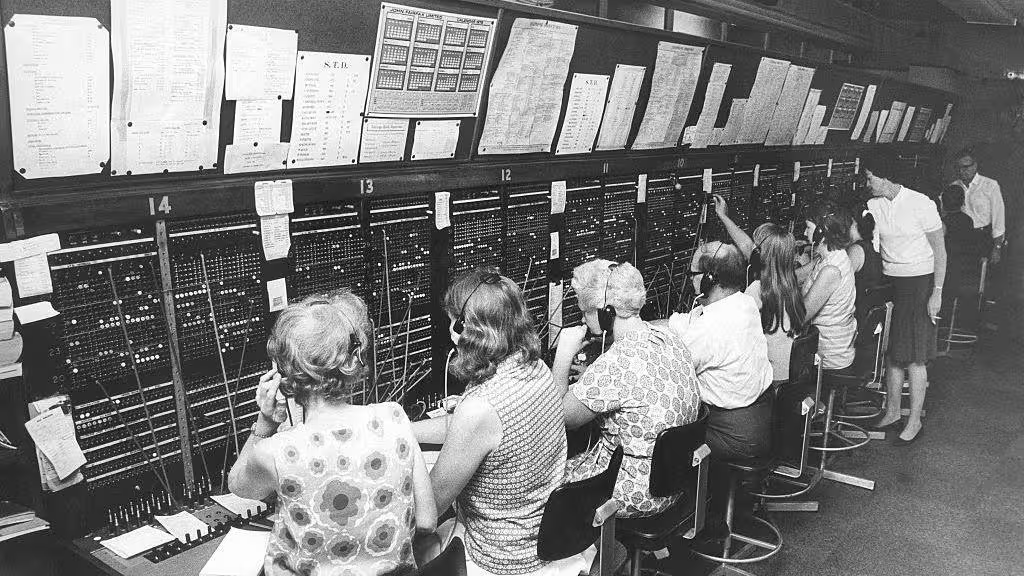
For decades, telephone operators connected calls by hand, and the job was one of the most common for young American women. Between 1920 and 1940, AT&T replaced operators with mechanical switching across more than half of the US telephone network.
Economists James Feigenbaum and Daniel Gross studied what happened, in a paper published in the Quarterly Journal of Economics in 2024 (volume 139, issue 3). They found two things that pull in different directions:
- The operators themselves paid a price. After a city switched to mechanical operation, the number of young women in later cohorts working as operators fell by 50% to 80%. Women already working as operators were less likely to be in the same job a decade later, and those who kept working were more likely to be in lower-paying occupations or to have left work altogether.
- The wider labour market recovered. Overall employment for later cohorts of young women did not fall. Growth in middle-skill clerical jobs and lower-skill service jobs, including new kinds of work, absorbed them.
The lesson is that a technology can leave an economy better off while still damaging the people whose jobs it removes first. Workers who lose an established career do not automatically benefit from the new jobs that appear later.
The change was also slow. In a separate paper on AT&T, the same authors note that mechanical call switching was invented in the 1880s but replaced operators at scale only decades later, because the technology required wider changes across the company. AI adoption in offices is not guaranteed to follow that timeline.
How personal computers moved office work
The personal computer shows a different path. Before computers, businesses relied on dedicated staff to type documents, prepare reports and organise records. Word processing let managers, professionals and other employees do some of that work themselves.
The work did not vanish; it moved. Generative AI could repeat the shift. An employee can have AI draft a first version of a report, a business owner can summarise customer feedback in minutes, and a marketing team can organise research faster. Whether the time saved becomes growth, better service and higher-value work, or smaller teams, depends on employers.
Is AI already cutting jobs? The evidence so far
The data so far point both ways, and the sources behind them matter.
Evidence of pressure on entry-level work. A Stanford study by Erik Brynjolfsson, Bharat Chandar and Ruyu Chen used payroll data from the largest US payroll software provider. It found that workers aged 22 to 25 in the most AI-exposed occupations saw a 13% relative decline in employment after generative AI spread. Adjustment came mainly through employment rather than pay. A separate analysis of vacancy data, published in June 2026 by the Institute of Labor Economics (IZA), found a 14–15% relative fall in junior software developer openings compared with senior ones.
The augmentation finding. The Stanford authors found that declines were concentrated in jobs where AI is more likely to automate work. In jobs where AI is mostly used to assist workers, employment held up or grew. This is the distinction that matters most for women in administrative roles: whether their employer uses AI to replace their tasks or to extend what they can do.
Conflicting surveys. Employer surveys disagree. An IDC survey found 66% of enterprises reducing entry-level hiring because of AI, while a Teneo survey of more than 350 public-company CEOs found 67% saying AI is increasing entry-level headcount. Readers should note who produces such surveys and what they sell.
What is not yet known. These studies are mostly from the United States and mostly about age and occupation, not gender. There is not yet a large study showing that women in clerical jobs are losing work faster than men because of AI. The ILO figures show where the risk is concentrated, not that the losses have arrived.
The bigger question: who benefits?
Consider two businesses using the same AI tools.
The first uses them to help staff finish routine work faster, then trains those staff to handle customer relationships and harder problems. The second uses the same tools mainly to cut staffing costs and offers affected employees nothing new.
Both become more productive. Their workers have very different outcomes. If productivity gains reach employees as better pay, stronger skills and more responsibility, the technology creates shared benefits. If the gains only reduce labour costs, productivity can rise while workers’ financial security does not.
The ILO notes that generative AI can also support job creation and improve job quality, so the outcome is a matter of choices rather than inevitability.
What this could mean in Nigeria and Africa
The ILO’s published figures are global, and the sources reviewed for this article do not give a Nigeria-specific exposure estimate. The ILO finds higher exposure in high-income countries, so Nigerian women’s risk should not simply be read off the global numbers. Several local factors matter, though.
Outsourcing and customer service. A report by Caribou Digital and Genesis Analytics, supported by the Mastercard Foundation, estimates that nearly 40% of tasks in Africa’s business process outsourcing (BPO) and IT-enabled services sector could be automated by 2030, and only 10% of those tasks are fully resistant to automation. Customer experience roles make up 44% of employment in the sector, and about half of their tasks could be automated. The report says junior roles and those mostly held by women are more susceptible. Nigeria’s BPO market is projected to grow from $980 million in 2023 to $1.84 billion by 2028, according to figures cited in Nigerian press coverage of the report, so the sector could expand even as the tasks within it change.
Informal work and access. In Africa, 85.8% of employment is informal, according to a 2024 white paper on AI and the future of work, which cites ILO figures. Using generative AI requires a device, data and the skills to use it, and paid tools that businesses need are often out of reach. For many women working informally, the first AI question is access rather than displacement.
Upskilling is the main response on offer. The BPO report recommends building AI training into company upskilling programmes, AI literacy courses aimed at women, and investment in outsourcing hubs outside major cities.
Which workers could be most exposed
AI exposure depends on tasks more than job titles, but some groups deserve attention.
- Administrative and clerical workers. Routine document preparation, record keeping, scheduling and information processing are the tasks AI tools handle best.
- Customer support staff. AI can answer common questions and sort requests, leaving people with complicated cases and relationship work.
- Entry-level office workers. Junior roles teach through research, drafting and data entry. If AI takes that work, employers must rethink how new staff gain experience.
- Workers without access to training or technology. People who cannot get training, reliable internet or a path into new roles will find it harder to adapt.
How workers can prepare
No strategy guarantees a job will stay the same, but these steps improve your options.
- Learn how AI applies to your current job. Find the routine tasks AI can help with, such as drafting, summarising and organising data, and check its output for mistakes.
- Build skills AI does not replace easily. Communication, judgment, negotiation, planning and problem-solving matter most where cases are not routine. The IZA vacancy study found that remaining junior openings leaned toward problem solving, communication and attention to detail rather than AI-specific skills.
- Use AI to add value, not only speed. Use the time saved to improve service, spot problems or support sales.
- Keep evidence of your work. A portfolio showing how you used AI responsibly to improve results is stronger than a list of tools on a CV.
- Review your field regularly. Check what your occupation now asks for, so gaps show up early.
[ADD: two or three free or low-cost AI-skills programmes available to Nigerian workers, with links, after checking they are current.]
What businesses should do before replacing workers with AI
Before automating a role, employers should work out which tasks need automation and which still need human judgment or personal contact. They should check whether current staff could be trained for new duties, test AI systems for errors and unfair outcomes, protect customer and employee data, and explain changes to staff.
The bias risk is concrete. The ILO warns that AI trained on flawed or incomplete data can disadvantage women in recruitment, pay decisions, credit scoring and access to services. Businesses should measure success by accuracy, customer satisfaction and sustainable growth, not by headcount reduction alone.
[ADD QUOTE: one comment from a Nigerian HR leader, BPO manager or business owner on how they are using AI with their teams.]
What policymakers and employers are being urged to do
The ILO says the policy choices made now will decide whether AI supports decent work and gender equality. The measures it points to include stronger social dialogue between employers, workers and governments, action on occupational segregation, and more women in AI-related roles. The African BPO report adds targeted AI literacy for women and mentorship programmes.
The outlook
The long-term effects of AI on women’s work are not fixed. History shows technology can erase established jobs, shift tasks between workers and create new kinds of work, and that the people displaced first often do not share in the later gains. Women’s concentration in administrative and clerical work places them in the path of the current wave. How hard it hits will depend on the speed of adoption, the new work that emerges and whether workers can get the skills and opportunities to move into it.
The key question is not whether AI can perform a task. It is whether workers and businesses can turn the productivity gains into better careers and sustainable growth.
Frequently asked questions
Will AI cause more women to lose their jobs?
Women face greater exposure to generative AI because they are concentrated in clerical and administrative work, according to the ILO. Exposure does not automatically lead to job loss. AI may automate some tasks, change responsibilities or reduce demand for certain roles. No large study yet shows women losing jobs to AI faster than men.
What percentage of women’s jobs are exposed to AI?
The ILO found that 29% of female-dominated occupations are exposed to generative AI, compared with 16% of male-dominated occupations. These figures measure occupational exposure, not the share of women who will become unemployed.
Which jobs are most exposed to AI automation?
Clerical, administrative and business-support roles with routine tasks, such as secretaries, receptionists, payroll clerks and accounting assistants. Some ICT jobs, including software development, also rank high.
How exposed is Africa’s outsourcing sector?
A Caribou Digital and Genesis Analytics report estimates nearly 40% of tasks in Africa’s BPO and IT-enabled services sector could be automated by 2030, with customer experience roles among the most affected.
How can women protect their careers as AI develops?
Learning to use AI, building problem-solving and communication skills, keeping evidence of your work and seeking more valuable responsibilities all improve adaptability. No single skill or tool guarantees job security.
Will AI create new jobs as it replaces tasks?
It may. After telephone operators were automated, later generations of women found work in clerical and service jobs. But the women already in the displaced jobs often ended up in lower-paying work or left employment, so new jobs do not guarantee a good outcome for those who lose old ones.
Does AI exposure mean a job will disappear?
No. Exposure means some tasks in an occupation could be affected. Whether a job disappears depends on cost, accuracy, business needs, regulation and the value of human judgment.
