
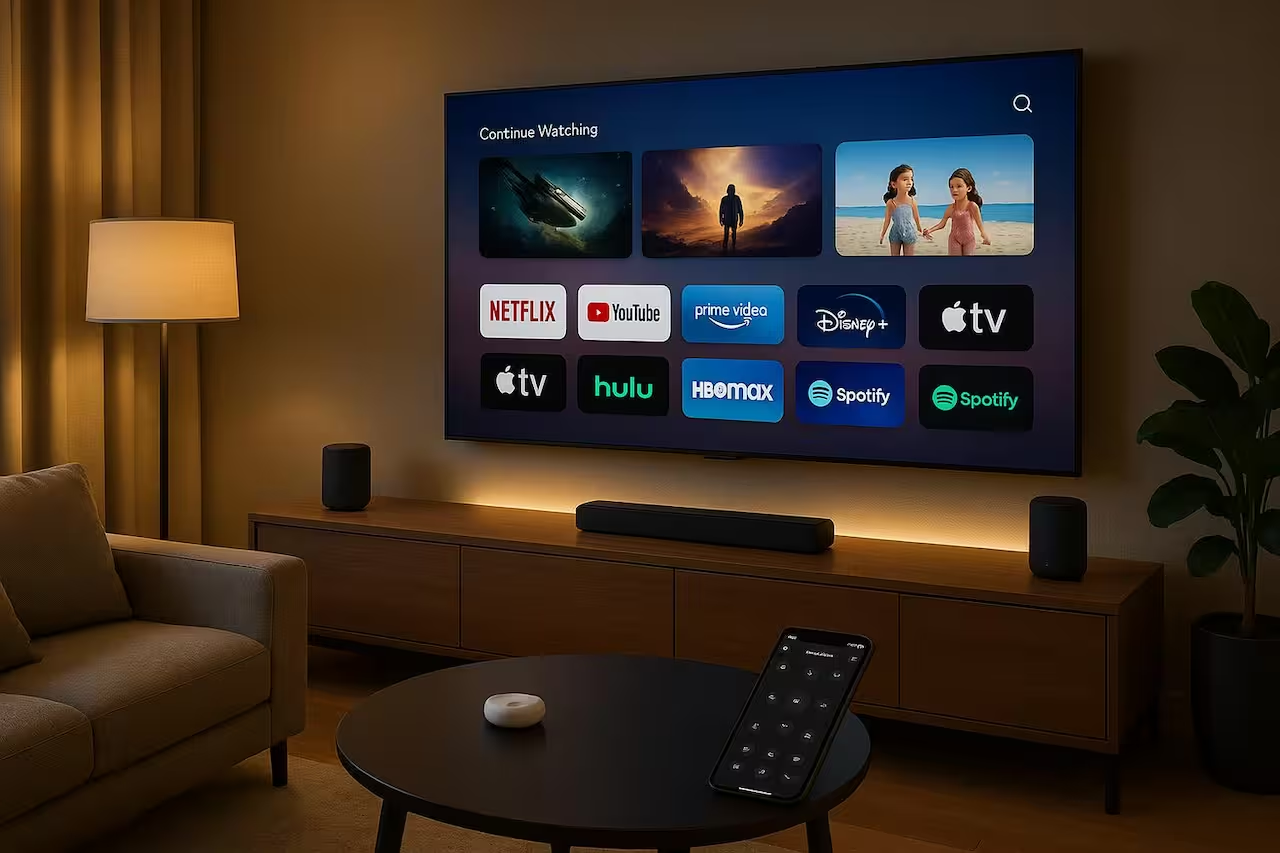
AI Is Helping People Remove Ads and Bloatware From Smart TVs

Smart TV owners are turning to artificial intelligence (AI) to remove unwanted advertisements, simplify crowded home screens and reduce tracking on their televisions. The emerging trend is giving consumers more control over devices that increasingly combine entertainment with advertising and data collection.
The movement gained attention in October after developers shared AI-assisted projects that modify Android TV and Google TV systems without requiring users to build every tool from scratch. Two projects, CleanYourTV on GitHub and the dumbtv project highlighted by TechCrunch, demonstrate how AI coding assistants can help users simplify their television experience.
For American households, the development raises a practical question: should a television do more than display shows and run streaming apps? As manufacturers compete to build more connected entertainment platforms, some consumers are using AI to reclaim a simpler viewing experience.
The trend is still experimental. Although these tools can make certain televisions easier to use, they may also disable important functions or create technical problems if applied incorrectly.
Why Are People Trying to Make Smart TVs “Dumb” Again?
Smart TVs were designed to make entertainment easier. They bring services such as Netflix, YouTube and other streaming apps together on one screen, often with voice controls and personalized recommendations.
However, some owners have become frustrated with sponsored content, crowded menus, slow performance and privacy settings that are difficult to find.
Instead of accepting the television’s default interface, these users want a simpler experience: turn on the TV, select an app or HDMI input, and start watching.
The growing interest in this approach reflects a broader consumer concern. People want the convenience of connected devices without necessarily accepting every advertising feature, recommendation system or data-collection option that comes with them.
AI coding tools are making TV customization easier
Previously, modifying a television’s software often required technical knowledge, specialized commands and considerable time spent researching the device.
AI coding assistants can help users understand these commands, identify software packages and prepare scripts for particular devices. This approach, sometimes called vibe coding, involves using ordinary-language instructions to help AI generate or modify software.
Two projects illustrate how this works:
- CleanYourTV: An open-source project designed to simplify compatible Android TV and Google TV devices by disabling selected preinstalled packages and replacing the default home screen.
- dumbtv: A separate project that aims to reduce advertising and tracking, simplify the interface and give users more control over supported Fire TV and Android-based devices.
The projects are not interchangeable, and their compatibility varies. CleanYourTV’s repository lists tested configurations for numerous television models, while dumbtv’s documentation identifies Fire TV Edition as its end-to-end-tested platform and explains that other systems require different approaches.
The important development is not that AI has invented television customization. Rather, it is helping more people attempt work that once demanded specialized technical skills.
Smart TV Ads and Tracking: What Is Actually Happening?
Advertising and data collection are central to this trend, but they are separate issues. Removing sponsored tiles from a television’s home screen does not necessarily stop the device from collecting information.
How automatic content recognition works
One technology relevant to smart TV privacy is automatic content recognition, commonly called ACR.
ACR can identify programs or other content displayed on a television by analyzing digital fingerprints or other information about what is playing. Depending on the implementation and settings, viewing information may be used for recommendations, audience measurement or advertising.
Consumer Reports’ August 2026 investigation into smart TV data practices examined several major television models and found that privacy controls and the effects of opting out differed across platforms. Its findings reinforce an important point: the details depend on the television, its operating system and the services enabled.
This does not mean every smart TV is secretly recording conversations or that every manufacturer uses identical tracking practices. ACR-based viewing data collection is different from voice recognition, and each feature has its own settings and privacy terms.
Why removing advertisements does not guarantee privacy
A customized home screen can remove unwanted promotional rows, but streaming applications may continue collecting information under their own policies. The television’s operating system may also retain other diagnostic or usage-reporting features.
For that reason, consumers should distinguish between three goals:
- Fewer ads: Removing sponsored recommendations from the home screen.
- Better performance: Disabling unnecessary applications or replacing a slow launcher.
- Greater privacy: Limiting viewing data collection, advertising identifiers and unnecessary reporting.
A modification that achieves one goal does not automatically accomplish the other two.
What Has Changed in October 2026?
The latest development is the growing public sharing of AI-assisted TV modifications, rather than an announcement from a major television manufacturer.
TechCrunch reported on October 19 that developer Gathin T. used Claude Code to simplify a Xiaomi television belonging to his parents. He said he removed 25 software packages and created a replacement launcher, then shared the approach publicly. According to his account, other users tried similar modifications on multiple devices over the following two days.
The associated CleanYourTV repository has continued to develop. Its October 19 release, version 2.3.0, listed 54 TV configurations and support for 12 languages. However, the project notes that not every configuration has been personally tested by its creator; some were contributed and tested by community members.
Separately, the dumbtv project offers scripts intended to make certain supported devices less dependent on their original advertising-heavy interfaces. Its documentation emphasizes safeguards and restoration procedures, while also acknowledging that different television platforms have different technical limitations.
These developments suggest that a small but active community is experimenting with more customizable television software. They do not establish how many ordinary US households are using the tools successfully, how much advertising revenue might be affected or whether television manufacturers will respond with software changes.
Which Smart TVs Can Be Modified?
Compatibility depends on the television’s operating system, model and software version—not simply the brand printed on the front.
Compatibility overview based on the projects’ published documentation as of October 20, 2026.
| TV platform | What the projects indicate |
|---|---|
| Android TV and Google TV | CleanYourTV lists numerous tested model configurations. Results can vary by model and firmware. |
| Amazon Fire TV / Fire OS | dumbtv supports selected Fire TV configurations; available modifications differ by OS version. |
| Samsung Tizen | Not supported by these projects in the same way as Android-based TVs. |
| LG webOS | Requires a different approach; Android TV instructions should not be applied. |
| Roku TV and other proprietary systems | Compatibility is limited or unavailable through these specific modification methods. |
Even two televisions from the same manufacturer may use different operating systems or firmware. Owners should check the exact model and software version before attempting any changes.
The Risks of Using AI to Modify a Television
The prospect of removing ads and speeding up a slow TV is appealing, but modifying system software is not as simple or risk-free as changing a wallpaper.
1. Important features may stop working
Some system packages control essential functions such as the home screen, remote navigation, HDMI switching, casting or software updates. Disabling the wrong component can leave a television difficult to operate.
TechCrunch reported that some users encountered problems while experimenting with AI-guided modifications, including a report of an Android TV becoming unusable. These are individual reports, not evidence that every modification will fail.
2. Streaming apps and updates may be affected
Removing or disabling software can interfere with applications, recommendations, voice controls and future updates. Some changes may be reversible, but a restore script cannot necessarily recover an application that has been permanently removed.
3. Network access creates security concerns
Some procedures require enabling Android Debug Bridge (ADB), a tool that lets a computer communicate with an Android-based device for debugging and maintenance.
Enabling network debugging without understanding the security implications can expose the television to unwanted access from other devices on the network. Users should follow the project’s security instructions and disable debugging when it is no longer needed.
4. AI-generated commands need human review
An AI assistant can misunderstand a model number, generate an unsuitable command or fail to recognize a device-specific limitation. A confident explanation is not proof that a command is safe.
Before attempting a modification, owners should back up relevant settings, check model-specific documentation and understand how to restore the original configuration. Anyone uncomfortable with command-line tools should avoid system-level changes.
How to Reduce Smart TV Ads and Tracking Without Hacking It
Most consumers do not need to modify system software just to improve their television’s privacy.
A safer first step is to review the built-in settings.
Check your TV’s privacy controls
On Roku TVs, Roku’s official instructions explain how to find the Automatic Content Recognition setting under Settings → Privacy → Smart TV Experience. Disabling ACR can reduce collection of viewing information through that feature, although previously collected data may be retained.
Samsung also provides official guidance on its Smart TV ACR feature, including how owners can opt out of viewing-history collection.
For other models, look for settings with names such as:
- Automatic Content Recognition (ACR)
- Viewing Information or Viewing Data
- Personalized Advertising or Interest-Based Ads
- Device Usage Data
- Voice Recognition or Microphone Access
The exact menu names vary by manufacturer and model. Turning off personalization may reduce targeted advertising without eliminating advertisements altogether.
For additional model-specific instructions, consult Consumer Reports’ smart TV privacy guide.
Consider using an external streaming device
Another option is to connect an external streaming device to the TV’s HDMI port and use that device for entertainment.
This can provide a different home screen and may reduce the built-in TV platform’s role in everyday viewing. However, the streaming device and its apps can collect their own data, so this approach is not a guarantee of privacy.
For consumers who want the simplest possible setup, using the TV as a display while keeping it disconnected from the internet can further limit data collection by the television’s connected platform. The trade-off is that built-in streaming apps and other online features may no longer work.
What This Trend Means for Consumers and TV Manufacturers
For consumers, the movement highlights a growing desire for greater control over devices after purchase. People may be willing to pay for a television’s display quality and streaming capabilities without wanting every promotional feature included in its software.
For manufacturers, the trend raises questions about how much advertising and personalization users will tolerate before seeking alternatives. Smart TV platforms can generate revenue beyond the original hardware sale, but aggressive advertising or sluggish interfaces may encourage some customers to look for ways around the default experience.
There is not yet enough evidence to conclude that these community projects pose a significant financial threat to the television advertising industry. Their reach, long-term reliability and appeal to nontechnical users remain uncertain.
The broader issue is whether manufacturers will make privacy settings clearer, reduce unnecessary promotional content and offer more control over home screens. Improvements in those areas could address some of the frustrations motivating the modifications.
Frequently Asked Questions
1. Can AI remove ads from a smart TV?
AI coding assistants can help users modify compatible televisions to remove some sponsored home-screen content and disable selected advertising-related software. Results vary by model, and removing these elements does not necessarily block advertisements inside streaming apps.
2. What is CleanYourTV?
CleanYourTV is an open-source project designed to simplify compatible Android TV and Google TV devices. It provides model-specific guidance for disabling selected software packages and installing a replacement home screen.
3. What is the dumbtv project?
dumbtv is a separate open-source project that aims to reduce unwanted advertising and tracking on supported televisions, with a particular focus on Fire TV and compatible Android-based systems.
4. Is it safe to use AI to modify a smart TV?
Not always. Incorrect commands can disable essential functions, disrupt streaming applications or make the TV difficult to use. Owners should verify compatibility, review proposed changes and understand the recovery process before proceeding.
5. Can I stop smart TV tracking without modifying the software?
Yes, you can often reduce tracking by reviewing privacy settings and disabling viewing-information collection, personalized advertising and unnecessary usage reporting. The options vary by platform, and some data collection may continue.
6. Will smart TVs become less cluttered in the future?
That remains uncertain. Consumer frustration may encourage manufacturers to improve their interfaces and privacy controls, but there is no confirmed industry-wide commitment to remove sponsored content in response to these projects.
What Happens Next?
The next important development will be whether these experimental tools become reliable enough for everyday consumers and whether more television models can support them safely. Updates to the open-source projects, additional model-specific testing and clearer manufacturer privacy controls will help determine how practical the approach becomes.
For now, owners who want fewer advertisements or greater privacy should start with their television’s built-in settings before considering software modifications. The central lesson is simple: buying a smart TV should not mean giving up the ability to understand and manage how it behaves.
